RSS
RSS



















AsianInNY is a proud media sponsor for the amazing Taiwan-based music group “A Moving Sound (聲動樂團)“‘s North America CD release tour and we will be there for their performance on Friday 9/23 9:30 PM at DROM in New York (85 Avenue A, New York).
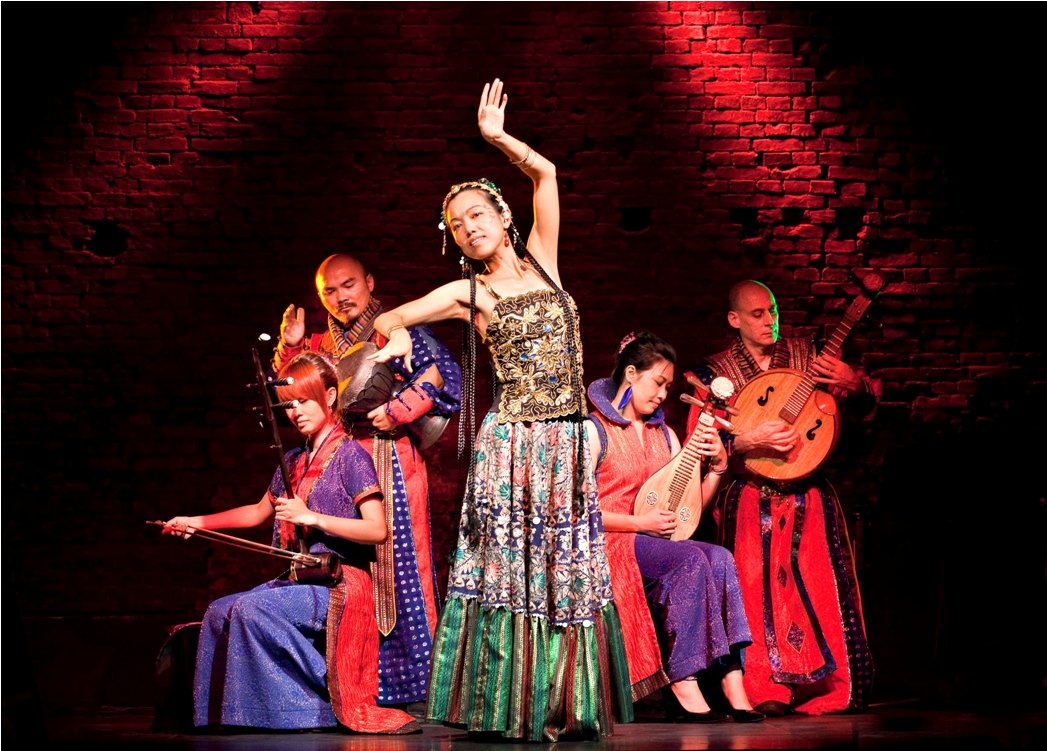
Asia has yet to make much of a mark on the ever-growing world music scene. But if there is one group poised to change that, it is A MOVING SOUND (聲動樂團). Drawing on the rich culture of Taiwan, a beautiful island off the coast of China where ancient Chinese traditions flourish as nowhere else — including on the mainland — the sound of AMS captures the way these ancient traditions jostle with the open, sophisticated, and avant-garde styles that have been welcomed in Taiwan in the two decades that have passed since the end of martial law. AMS has fashioned a exquisite, accessible and, yes, quite “moving” sound that speaks eloquently of its unique country of origin, while at the same time speaking in a universal language to listeners around the world.
Now American listeners have an opportunity to hear AMS on their first U.S. release which debuts on September 13, 2011. The self-titled set premieres on Motéma Music, a rising New York City-based label that is showcasing some of today’s most artistically virtuosic and culturally innovative recording artists in world music and jazz, including Randy Weston, Monty Alexander, Malika Zarra, Oran Etkin, and many others.
In the decade since AMS was formed in Taipei by Mia Hsieh and Scott Prairie, the group has released three albums in their native Taiwan: Little Universe (2004), Songs Beyond Words (2007) and Starshine (2009), with tracks from the latter two serving as the source for their eponymous Motéma debut. AMS has played many major tour dates in North America and Europe, including a successful showing at the influential WOMEX Festival in Seville in 2006. They were featured artists in a special program on Taipei presented by the Lonely Planet television series (broadcast in 50 countries on The Discovery Channel), and have also been profiled in The Huffington Post, Public Radio International’s The World, Link TV, Taiwan Public TV, BBC Radio 3’s World Routes, and a variety of Taiwanese media outlets.
The music of AMS has been praised by critics and world music advocates around the globe. Tom Pryor, supervisor of National Geographic World Music, described AMS as “one of the most original outfits working in the world music arena today, an inspired marriage of Taiwanese traditional sounds and Western pop experimentation that forges an important new musical dialogue.” Chris Heim of the Global Village radio show said their work was “…delicately balanced between many worlds… an entryway to Eastern music and an artful expression of the human condition.” And Theodore C. Levin, the noted Dartmouth University ethnomusicologist who was the first Executive Director for Yo-Yo Ma’s Silk Road Project and the producer of the groundbreaking Smithsonian Folkways Music of Central Asia series, describes their work as “really beautiful, and beautifully presented.”
THE HISTORY OF A MOVING SOUND
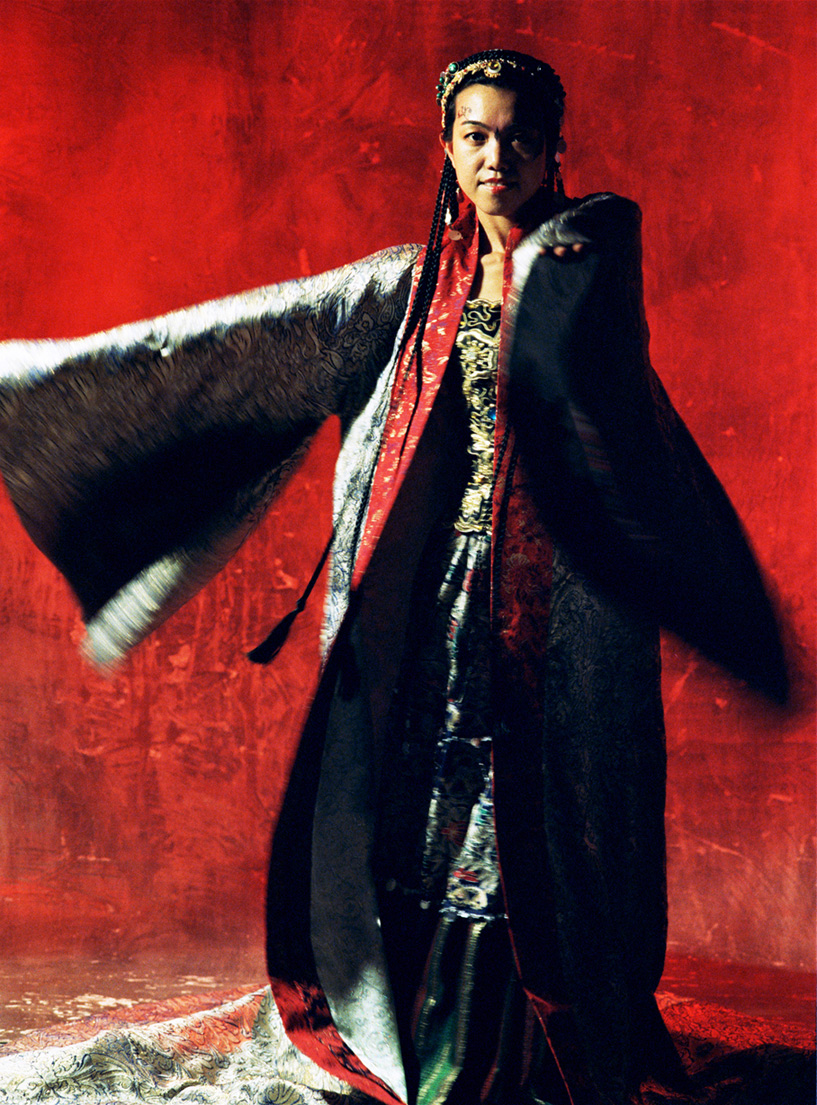
The story of AMS begins with the personal and artistic journeys of its two founders, American musician Scott Prairie and Taiwanese singer and dancer Mia Hsieh.
Scott grew up in small town outside Pittsburgh, fated, or so his family believed, to a career in classical music. He played French horn and was accepted into the prestigious Carnegie Mellon School of Music. “Then one night with no prior thought, I just stopped,” he says. He spent some time in a psychology doctoral program and more time traveling through Europe before music called once again. But this time he returned not as a classical musician, but as a singer-songwriter and experimental composer, working with Wharton Tiers (Sonic Youth) and guitarist Mark Ribot and performing at New York City clubs including The Kitchen and The Knitting Factory. It was there he first met Mia.
Mia’s parents were part of the wave of some two million people who fled to Taiwan with Chiang Kai-Shek at the end of a civil war which left the Communists in control of mainland China. Unlike Scott’s family, the sole concern for Mia’s family was survival in their new Taiwanese home. “There was nothing about art … just be successful,” says Mia matter-of-factly.
Mia grew up in the era of martial law in Taiwan. In fact, the country holds the record (38 years) for the longest period of martial law in the history of the world. It began in 1949 after the infamous 228 Incident (the subject of Mia’s song, “Howling Wind”), the date of a massive government crackdown on democracy protests that left as many as 20,000 people dead. All political dissent, and also the aboriginal cultures and languages of Taiwan, were suppressed during this time. Because Mia’s family spoke the Taiwanese dialect, and because later at university, when martial law had ended, she was able to regularly visit a nearby aboriginal community, Mia gained a rare insight into, and familiarity with, traditional cultures which few outside those communities can match.
The end of martial law brought many other changes as well. Mia, like many people in Taiwan, was faced with new questions. “A big part of my journey is about searching for identity. I wanted to find some connection to this place.” She began doing oral histories, including those of her parents, became increasingly involved in art and dance, and then got a Fulbright scholarship that brought her to New York for six months. There she studied voice and dance with Meredith Monk, whose groundbreaking “interdisciplinary performance” technique, which brings together music, movement, voice, light, and other elements, would also shape the expansive performance style of AMS.
“To be in New York and on my first trip abroad was quite a big journey, a big adventure. I had no idea what New York was, and I wanted to be open to it. I saw myself as a blank paper,” she says. “The diverse culture and avant-garde art opened me to new places I was hungry to visit and at the same time helped me see my own culture with new eyes. I suddenly understood that I was longing for a connection, a connection that I had inside already, but kept denying. New York helped me see my unique qualities and realize I wanted to go back home and start something from here.”
Adds Scott, “It’s just fate that I ended up here. I wasn’t really an Asia-phile. It’s just fate that my creative style also fits in here, and that Taiwan was suddenly open for this kind of collaboration.”
After Mia returned to Taiwan, Scott followed a few months later, and in the nine years since, neither has ever looked back. They explored experimental and traditional music, and incorporated multimedia, dance and costume into their work (their costumes are specifically designed for the group and, like their music, an artistic reinterpretation of traditional forms specifically designed for the group to reflect their music) into their work. Even their name is a reworking of familiar terms – first in Chinese as Sheng (sound) Don (movement), which they then translated into English as A Moving Sound.
Chinese instruments – especially the erhu (two-string vertical fiddle) and zhong ruan (a four-string lute) – give the music of China its distinctive texture. AMS both returns these instruments to their original role as solo instruments (a role that disappeared as Chinese music adopted Western orchestral concepts) but also innovates within that ancient tradition. Traditional Chinese music styles serve as an inspiration and as the foundation for several compositions on the CD. The ancient, meditative, and elegant “nan guan” style (more carefully preserved in Taiwan than the mainland) is the source for the AMS song “Gu Qin,” with lyrics based on a famous 11th century poem. AMS also incorporates Taiwanese aboriginal and folk influences. “Ghost Lake” is a reinterpretation of a traditional tale sung in both an aboriginal dialect and an experimental vocal style. Taiwanese folk music inspired “The Market Song,” a popular concert number depicting the market where Mia’s parents worked.
“The album goes from the heavens to the earth,” Mia explains. “Songs like ‘Silk Road’ and ‘Gu Qin’ are the meditative, transcendental side, but the CD also has very earthy songs like ‘The Market Song’ or ‘Toh Deh Gong,’ which is a modern talking song, like rap, but the lyrics explore the traditions of how people worship the God of Earth, the most popular god in Taiwan. So this is folk culture, but it is also grounded in a very ancient philosophy and religion.”
“Taiwan has only been free from martial law for 20 years,” Mia notes, “so only now are some of these new influences coming in. When we started, not many people even knew what world music was here, and now more and more groups are wanting to try things. We believe music is a channel and a way to connect with people in a positive way, to go on a journey together. We want there to be no boundaries.”
So now, having crossed the boundaries that separate the traditional from the modern, the East from the West, the personal from the universal, AMS crosses another border, bringing their music with its innovation and sophistication, yet deep and ancient roots, to American audiences for the first time.
A BRIEF HISTORY OF TAIWAN AT ITS CENTENNIAL
The rich and diverse culture of Taiwan is the starting point for AMS. This mountainous island, slightly bigger than Maryland, and about 100 miles off the southeast coast of China, was initially settled by people of Malaysian and Polynesian descent. Though the first Chinese officials landed in Taiwan around 600, it would be another millennium before the island was officially under Chinese control. The first contact with the West came when a Portuguese ship sailed there, and its navigator called it Ilha Formosa or “Beautiful Island.” It would be known as Formosa for the next four centuries. The Dutch occupied the island from 1624-1662, bringing in Chinese workers who would settle with aboriginal groups and become the first “Taiwanese.” In the years that followed, the Spanish briefly held part of the island and an independent kingdom was established by a Chinese pirate before Taiwan finally came under the control of the Manchus.
In the aftermath of China’s defeat in the Sino-Japanese War, it was turned over to Japan in 1895. At the end of World War II, Taiwan reverted to Chinese control and within a few years became the outpost for the Nationalist Chinese government. This mix of aboriginal, Chinese and Western influences makes for a distinctive and unique culture. And with the upheaval of the Cultural Revolution and the claim of the Nationalists to be the “true” Chinese government, more ancient Chinese traditions, martial arts, artifacts, instruments and musical styles have been preserved on Taiwan than in China itself.
In the 20 years since the lifting of martial law, Taiwan has become a major tourist destination and developed into one of the most modern, multicultural and financially successful countries in Asia. Its long history of multiculturalism has left Taiwan a vibrant and resourceful nation as it celebrates its 100th anniversary in 2011. Politically and economically, Taiwan serves as an important bridge between China and the West, and A Moving Sound is perfectly poised at the center, the musical voice of a new generation, one that honors the past as it moves, full-throttle, into the future. For more info: www.amovingsound.com